The question for marketers is not whether AI Overviews are happening but what specifically they change about your budget, your reporting, your channel mix, and your content strategy. That is a different conversation from the technical one about schema markup and crawl signals. This article focuses on the marketing practitioner’s view.
SGE and AI Overviews: where things stand
Google’s Search Generative Experience was the testing label used through 2023 and into 2024. When Google moved the product from labs to live search results, it became Google AI Overviews. Both terms refer to the same feature: AI-generated answer summaries that appear at the top of the search results page for certain queries, synthesising information from multiple web sources before the traditional organic links.
The rollout has not been uniform. AI Overviews currently appear most consistently on informational queries, particularly ones where Google’s systems determine a direct, synthesised answer is more useful than a list of links. Queries with commercial, transactional, or local intent see AI Overviews far less frequently. “How does refinancing work” is more likely to get an AI Overview than “mortgage refinance rates today” or “mortgage lender near me.”
The scope continues to expand. Google has said publicly that AI Overviews are part of the long-term direction for Search. Marketers treating this as a passing experiment are building plans on a faulty assumption. The practical step is understanding what has changed, what has not, and where the specific risks and opportunities land for your organisation.
The traffic and attribution impact
The most immediately visible impact for most marketing teams is CTR decline on informational queries where AI Overviews now appear.
Research from BrightEdge and Semrush tracking AI Overview presence has consistently shown that click-through rates drop when an AI Overview appears for a query. If the answer is presented at the top of the page, a share of users who previously would have clicked a result now get what they need from the SERP and move on. SparkToro’s zero-click search research found that close to 60% of Google searches in the US were already zero-click before AI Overviews fully rolled out, suggesting an established trend that AI Overviews has accelerated rather than created from scratch.
For marketers, identifying which of your tracked keywords are already being impacted is a practical first step. Pull your keyword set from Google Search Console and filter by informational query types. Then manually test a sample of those queries in Google Search to see which are triggering AI Overviews. Any query where an AI Overview appears is a query where your CTR is likely declining regardless of your ranking position.
Attribution is the second issue. When AI Overviews absorb an informational query, users who remember your brand name from a citation may later search your name directly or type your URL. That traffic shows up as branded search or direct in your analytics, not as organic from the original query. The result is that organic traffic appears to fall while branded and direct traffic hold or grow. Year-over-year organic comparisons that do not account for this pattern will show decline that is partly an attribution artefact rather than an audience loss.
Resetting expectations with clients or leadership before the data arrives is more comfortable than explaining it after. The conversation worth having now: organic clicks for informational queries may decline even while impressions hold or grow, and some of that traffic is being reclassified rather than lost.
The content strategy impact
The impact of AI Overviews on content strategy differs significantly by content type, and most marketing teams are most exposed where they least expect it.
Informational blog content, particularly generic how-to guides, definition pieces, and FAQ-style articles, faces the most disruption. These are the query types AI Overviews are specifically designed to answer. A blog post that exists to explain what a term means or walk through a common process is doing the same job as an AI Overview. When both are available, the AI Overview wins the click because it is at the top of the page before the organic results load.
Commercial and transactional content is considerably more protected. Product pages, service landing pages, comparison content, and anything that supports a purchase or hiring decision retains clicks because AI Overviews do not complete commercial intent. A user who wants to buy something, hire someone, or compare specific options needs to click. AI Overviews rarely dominate these queries.
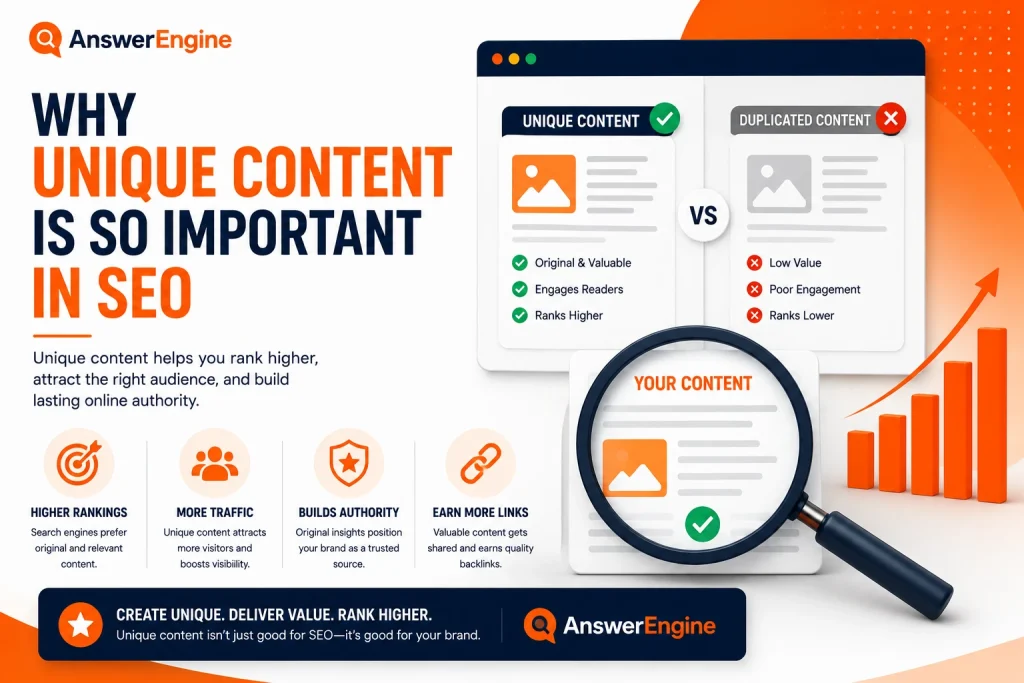
The strategic implication is a shift in where content investment makes sense. Informational content with no differentiation, no original data, and no first-person expertise is increasingly a poor investment of production resources. Informational content containing original research, expert insight, or proprietary experience occupies a different risk position. It is not immune to AI Overviews, but it is positioned to be the source AI Overviews cite rather than the source they displace.
The format shift worth noting is from keyword targeting to question targeting. Keywords like “content marketing” drive traffic to articles explaining what content marketing is. AI Overviews answer those explanation queries without a click. Questions like “which content marketing approach works best for professional services firms with limited budget” are more specific, reflect real decision-making intent, and are less likely to be fully satisfied by an AI summary. Shifting content briefs toward specific, decision-supporting questions rather than broad informational keywords is the content strategy adjustment that makes sense right now.
The paid search impact
AI Overviews change the page layout in ways that have real consequences for Google Ads performance.
On queries where an AI Overview appears, traditional ad placements are pushed further down the page. In some layouts, ads appear above the AI Overview. In others, they appear below the AI content and above the organic results. The ad real estate the market has been buying for years is less consistently positioned relative to user attention than it was before AI Overviews existed.
Branded paid search becomes more important in this environment, not less. When AI Overviews appear for queries adjacent to your brand, having paid placement on your own name protects against competitors who bid on branded terms. The cost of branded campaigns is typically low because Quality Scores on your own name are high. The protection is real because branded queries are commercial intent queries, and commercial intent queries retain clicks.
The opportunity in paid search from AI Overviews is in commercial-intent queries that AI Overviews do not dominate. If your target queries are product comparisons, service evaluations, or purchase-intent searches, organic CTR has not fallen as sharply on these and paid placement continues to work effectively. Shifting paid budget toward commercial-intent terms and away from informational terms where organic impressions without clicks are inflating the apparent audience is a reasonable reallocation for this environment.
The reporting and measurement impact
Year-over-year organic traffic comparisons are increasingly misleading as a standalone metric, and marketing teams need to update how they frame performance data.
A site can have flat or declining organic clicks alongside growing organic impressions and growing branded direct traffic. In an AI Overview environment, this pattern is consistent with growing AI citation: impressions grow because the content appears in AI Overview contexts, branded search grows because cited users later search the brand name, and direct clicks grow because citation-driven users return directly. Organic clicks for informational queries fall because AI Overviews absorb those queries. Presenting this as a single “organic traffic is down” story misrepresents what is happening.
Building an AI search presence metric into regular reporting gives stakeholders a more accurate picture. The simplest version: track referral traffic from perplexity.ai, chatgpt.com, and similar AI engine domains as separate channels alongside branded search trends. A rising trendline in AI engine referrals and branded search alongside flat or declining informational organic clicks signals growing AI search presence, not underperformance.
The client and leadership conversation about “impressions are up, clicks are down” is one every digital marketing team will have if they have not already. The framing that tends to land: Google is answering more questions directly in the SERP rather than routing users to websites. Impressions that do not convert to clicks are now a feature of the channel for certain query types, not a sign of campaign underperformance. The response is to optimise for citation alongside ranking, not to blame the campaign.
How marketers should respond
None of this requires panic. It requires adjustment.
The first practical step is auditing your tracked keyword set for AI Overview exposure. Pull your top organic traffic keywords from Google Search Console. Manually test a representative sample in Google Search. Categorise which queries trigger AI Overviews and which do not. This tells you where your organic traffic is most exposed and where it is protected. Most marketing teams will find their commercial and local query traffic is in better shape than their informational query traffic.
The second step is rebalancing content investment. Resources being spent on generic informational articles with no differentiation are increasingly poor investments for organic traffic. The same resources applied to content with original data, expert perspective, and specific decision-supporting answers generate both ranking results and AI citation potential. Redirecting toward questions rather than keywords, and toward unique content rather than topic coverage for its own sake, is the practical content strategy response.
The third step is treating AEO as an extension of SEO rather than a separate workstream. Structuring content to be cited in AI Overviews uses the same technical SEO foundation and content quality standards, with additional work on direct-answer structure, FAQ schema, and entity signals. An AnswerEnginee free audit shows where your current setup positions you for both ranking and AI citation.
The fourth step is diversifying traffic sources. If organic search drives more than 60% of your total site traffic, you are carrying significant channel concentration risk during a period when the organic channel is structurally changing. Building email lists, community engagement, and direct audience relationships is a risk management response, not a signal that search is finished.
Frequently asked questions
What is Google SGE and has it launched?
Google SGE, which stood for Search Generative Experience, was the beta name for what is now called Google AI Overviews. The product launched broadly in the United States in May 2024 and has been expanding to other markets since. It is a standard, live feature of Google Search, not an experiment or opt-in product. When you see AI-generated answer summaries appearing above the organic results in Google Search, you are looking at AI Overviews, the product formerly known as SGE. The rename happened when Google moved from limited testing to full rollout.
How does Google AI Overviews affect organic traffic?
Google AI Overviews reduce click-through rates on informational queries where they appear. Research from BrightEdge and Semrush tracking AI Overview prevalence shows consistent CTR decline on queries with AI Overview presence. The decline is concentrated on informational query types: how-to content, definition pages, and general explanatory articles. Commercial, transactional, and local queries retain clicks because AI Overviews do not satisfy the user’s intent on those query types. The net effect for most websites is organic traffic decline on informational content alongside stable or growing clicks from commercial and local queries.
Should marketers be worried about Google AI Overviews?
Worried is the wrong frame. Informed and adjusted is the right one. AI Overviews create real risk for marketing programmes heavily invested in generic informational content with no differentiation or original value. They create a real opportunity for brands that can become cited sources inside AI Overviews rather than displaced by them. The practical response is to audit your traffic exposure by query type, redirect content investment toward differentiated and question-specific content, update your reporting to account for the changing relationship between impressions and clicks, and treat AEO as an extension of your existing SEO practice.
How do I track the impact of AI Overviews on my website?
Start with Google Search Console. Filter your top organic queries by informational intent and compare impression and click trends over the past twelve months. Queries where impressions hold or grow but clicks fall are the clearest signal of AI Overview impact. Then manually test those queries in Google Search to confirm AI Overviews are appearing. Separately, set up tracking for referral traffic from perplexity.ai and chatgpt.com in Google Analytics as a proxy for growing AI citation. Track branded search query volume as a proxy for AI-driven brand recognition. These metrics together give a more accurate picture than organic clicks alone.
What is the best marketing strategy for an AI search world?
The most durable strategy builds on three adjustments to existing practice. First, shift content investment from broad keyword targeting to specific, decision-supporting questions with differentiation built in through original data, expert perspective, or first-person experience. Second, structure that content to be cited in AI Overviews by leading with direct answers, using FAQ schema, and building topical authority through content clusters rather than standalone articles. Third, diversify your traffic sources so that changes to organic search mechanics affect a smaller share of your total audience. None of this abandons traditional SEO. It extends it for the environment search has become.