Understanding which category your publication falls into, and what you can do about it, is a more useful exercise than debating whether AI Overviews are good or bad for the open web. They are here. The practical question is how to respond.
What AI Overviews actually are
Google’s AI Overviews, previously called the Search Generative Experience (SGE) during testing, are AI-generated answer summaries that appear at the top of certain Google search results pages. They synthesise information from multiple web sources and present a direct answer before the traditional organic results.
They do not appear on every query. Google triggers AI Overviews selectively, with higher prevalence on informational queries where a clear answer exists. Navigational queries (“Facebook login”), transactional queries (“buy running shoes”), and most local service queries (“plumber near me”) are far less likely to trigger an AI Overview. Informational queries, particularly definitional, how-to, and explanatory content, are where AI Overviews appear most consistently.
The citations AI Overviews pull from are not random. Google selects sources from the top organic results for the query, particularly those with strong topical authority, clean technical signals, and content structured to answer the specific question directly. A site that ranks well for a query is more likely to be cited in the AI Overview for that query, but ranking well alone does not guarantee citation. Structure and schema matter independently.
The real traffic impact: what we know so far
The data on AI Overview traffic impact is accumulating, and the picture is not encouraging for publishers whose traffic is concentrated in informational content.
Research from BrightEdge published in 2024 found that AI Overviews were appearing on a significant share of informational queries and that click-through rates for those queries were declining as a result. SparkToro’s analysis found that close to 60% of Google searches in the US were already zero-click in 2024, before AI Overviews fully rolled out, suggesting the trend was already established before AI Overviews accelerated it. Semrush data tracking AI Overview prevalence found that informational queries trigger them at substantially higher rates than commercial or navigational queries.
For publishers whose traffic is built on informational content, this is where the exposure sits.
The impact is not uniform across content types. Informational queries take the hardest hit because these are precisely the queries AI Overviews are designed to answer. A blog post explaining what a term means, a how-to guide covering a common task, or a definition page for an industry concept are all in the highest-risk category. When an AI Overview fully answers the question, a meaningful portion of users who previously would have clicked a result now get their answer from the SERP and move on.
Commercial, transactional, and local queries are considerably more protected. A user searching for a product to buy, a service provider to hire, or a local business to visit is not satisfied by an AI-generated summary. They need to click somewhere to complete their intent. These query types still drive clicks, and AI Overviews appear on them far less frequently.
How publishers get cited versus how they get bypassed
The difference between a publisher that gets cited in AI Overviews and one that gets bypassed is not simply domain authority or publishing volume. It comes down to how content is structured and whether it gives Google’s AI systems something extractable to work with.
Content directly answers the specific question the query poses, ideally in the first paragraph or a clearly marked section near the top of the page. The page has clean technical signals: fast loading, no crawlability issues, proper indexing status. The domain has topical authority for the subject matter, meaning it consistently publishes credible content on that topic rather than covering everything loosely. And the content has structured data, particularly FAQPage or HowTo schema, that makes individual answers machine-readable. Pages that combine these elements consistently appear as citation sources. Pages missing any of them consistently do not.
Sources that get bypassed typically have the answer buried after several paragraphs of scene-setting, or structured in a way that requires reading the full article to extract the relevant information. Generic content that answers a question the same way as hundreds of other pages gives AI systems no particular reason to prefer it over alternatives. Pages with technical issues, whether slow load times, indexing errors, or missing schema, are less likely to be selected even when the content itself is solid.
The domain authority component is real but not sufficient on its own. A high-authority domain with poorly structured content will lose citations to a lower-authority domain that directly answers the question in an extractable format. Structure consistently outperforms authority when authority is not dramatically different between competitors.
The types of content most at risk
Publishers should be honest with themselves about where their traffic exposure actually sits.
Generic how-to and definition content is the highest-risk category by a significant margin. If your publication has built substantial traffic on articles explaining what common terms mean, walking through tasks that can be summarised in a few sentences, or answering FAQ-style questions that have clear concise answers, that traffic is vulnerable. AI Overviews do exactly what those articles do, but without requiring the user to click.
Thin aggregator pages, the type that pull together lists of resources, rankings, or summaries without original analysis, are similarly exposed. If the value of a page is in gathering information that exists elsewhere, an AI Overview can perform the same function directly.
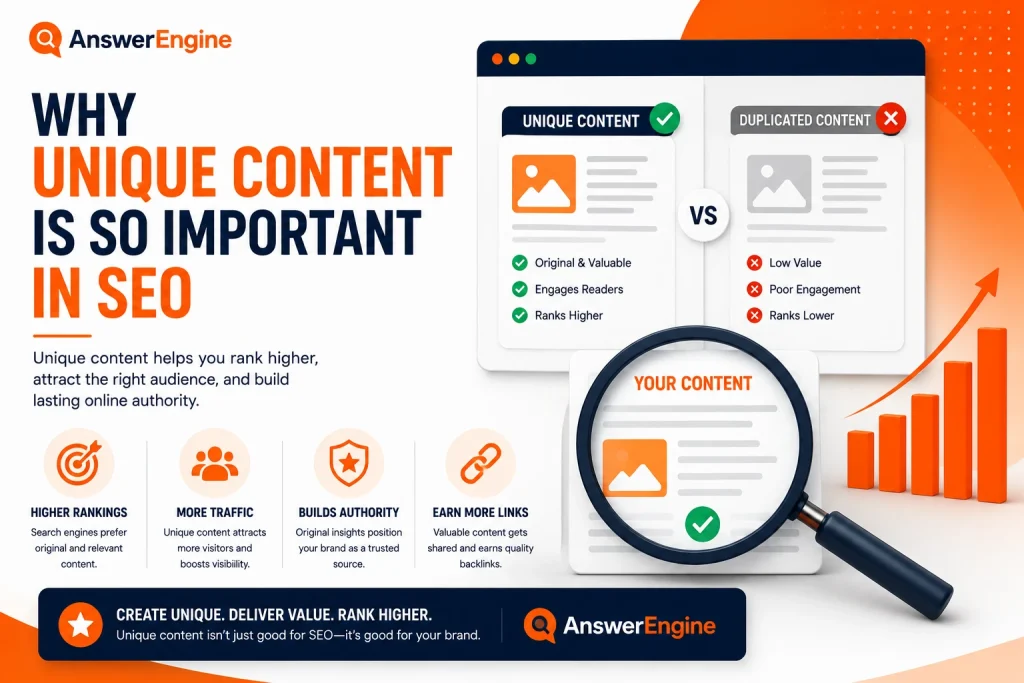
Content that answers the same question as hundreds of other pages with no point of differentiation is the third category at serious risk. When AI systems choose citation sources, they have no strong reason to prefer one undifferentiated piece of content over another. If your article on a topic is functionally identical to ninety-nine other articles on that topic, your citation probability is roughly 1 in 100, and your non-citation traffic loss is roughly total.
Content with genuine differentiation sits in a different position. AI systems cannot fabricate original data. They cannot replicate a journalist’s interview with a source. They cannot reproduce a study that only your publication ran. Content that contains what only you know is structurally protected from full AI substitution.
Content strategies for publishers in an AI Overview world
The publishers who will come out of this period ahead are those who treat the transition as a forcing function to produce better, more differentiated content rather than as an existential crisis.
Invest in what AI cannot replicate
Original research, proprietary data, first-person reporting, expert interviews, case studies with real numbers, and analysis requiring actual domain expertise are things AI systems can summarise but cannot originate. If your publication can be the primary source of data or experience that AI engines then cite, your position improves rather than worsens. A publisher who runs original reader surveys, publishes benchmark data from their own research, or has journalists with genuine expert relationships is building content that cannot be substituted.
Restructure existing content for citation
Content written to rank, with long introductions, gradual build-up, and the answer buried several paragraphs in, needs to be restructured. The direct answer should appear early, in a self-contained paragraph that makes sense without the surrounding context. FAQPage schema should be added to any content that answers defined questions. This restructuring improves citation probability without requiring new content creation.
Build a direct audience alongside search traffic
Publishers who depend on organic search for the majority of their traffic are renting their audience from Google. AI Overviews accelerate the case for building owned audience channels: email newsletters, membership programmes, community platforms, and direct subscription relationships. A reader who comes back because they chose to subscribe is not affected by changes to the Google SERP.
Target query types that are structurally protected
Commercial, transactional, and local content generates clicks because AI Overviews do not complete the user’s intent on those queries. Publishers can shift content investment toward topics that require clicking, comparing, or deciding rather than just knowing. A guide to choosing between products requires a click to be useful. A definition of a term does not.
The AEO opportunity for publishers
The publishers framing this as purely a loss are missing the other side of the ledger.
Being cited in an AI Overview is not nothing. When Google’s AI Overview cites your publication by name and links to your content, that citation is an endorsement at the top of the SERP. Users who see your name associated with a trusted AI answer are building brand recognition that influences future direct traffic and branded search. Publishers consistently cited across topics their audience cares about build AI-era authority with real commercial value.
The citation itself also drives traffic. Users who want more than the overview answer, who want to verify the source, or who are doing deeper research will click cited links. Traffic from AI Overview citations tends to be high-intent: readers who already know the answer exists on your site and are choosing to visit.
The goal of content creation should shift from ranking to being citation-worthy. These goals overlap significantly, because citation-worthy content is well-structured, authoritative, and directly useful. But the last 20% of the optimisation work looks different. Citation-worthiness means direct answers near the top of the page, schema markup, structured FAQ content, and clear entity signals around the publication’s topical authority.
An AnswerEnginee free audit shows you which of your existing pages are set up to be cited and which are set up to be bypassed. That is the starting point for deciding where to focus restructuring effort versus where to invest in new differentiated content.
Frequently asked questions
Will AI Overviews reduce website traffic?
For publishers whose traffic is concentrated in informational query content, yes, AI Overviews are likely to reduce click-through rates for those queries. Research from BrightEdge, Semrush, and SparkToro consistently shows declining CTR on queries where AI Overviews appear. The reduction is not uniform: commercial, transactional, and local queries retain clicks because AI Overviews do not complete the user’s intent on those query types. Publishers with diversified content portfolios, strong direct audience channels, and content structured to be cited rather than just ranked are better positioned to absorb and offset the traffic reduction.
Can publishers opt out of Google AI Overviews?
Not selectively. Google does not offer an opt-out specifically for AI Overviews. Publishers can remove their content from Google’s index entirely using a noindex tag, or block Google’s crawlers using robots.txt, but both approaches remove the content from all Google Search, not just from AI Overviews. There is also the option to block specific AI crawlers using the llms.txt convention, but this does not prevent AI Overviews from using content that has already been indexed. For most publishers, opting out of Google entirely is not a viable commercial option. The practical response is to structure content to be cited in AI Overviews rather than bypassed by them.
Which types of content are safe from AI Overview traffic loss?
Commercial and transactional content, where the user needs to click to complete their intent, is the most protected. Local service content, where the user needs a specific business name, contact detail, or location, retains clicks because an AI Overview summary does not complete the intent. Long-form investigative journalism, original research, and content based on unique data or expert sources is protected because AI systems cannot replicate the source material. Content requiring personal comparison, such as product reviews comparing specific options, retains clicks because users need to verify specifics before deciding. The most exposed content is informational and definitional content where the answer is short, clear, and universally agreed upon.
How do I get my content cited in Google AI Overviews?
There is no guaranteed method, but several factors improve citation probability consistently. Content should directly answer the target question in the first paragraph or a clearly marked section near the top of the page. FAQPage schema should be implemented on any content that answers specific questions. The page needs clean technical signals: fast loading, correct indexing, no crawlability issues. The domain should have established topical authority for the subject matter rather than covering topics opportunistically. And the content should be meaningfully differentiated from competing pages rather than functionally identical to dozens of alternatives.
Are AI Overviews permanent or will Google roll them back?
The direction of travel is toward more AI integration in search, not less. Google has invested heavily in AI Overviews and they are now a standard feature of the search experience in the US and expanding internationally. A full rollback is unlikely. Google has made adjustments to AI Overview behaviour in response to specific errors and user feedback, and query coverage and formatting have evolved since launch. Publishers should plan for AI Overviews as a permanent structural feature of Google Search and build content and audience strategies accordingly, rather than waiting for a reversal that is not coming.