What SGE is and the naming update
Google SGE synthesises AI-generated answer summaries from multiple web sources and displays them above the traditional organic link results for certain queries. A user asking “how do I choose a standing desk” sees an AI-generated answer before they see any organic links.
SGE is now called Google AI Overviews. The term “SGE” has remained in circulation because many practitioners learned it before the rename. Both terms appear in this article because search volume exists for both.
What this means practically: AI Overviews (SGE) appear most consistently on informational queries: how-to, what-is, comparison, and research queries. They appear far less often on commercial, transactional, and local service queries. Optimising for SGE citation primarily means optimising for the queries that trigger AI Overviews — the informational and comparison queries where AI-generated answers are most common.
What SGE and AI Overviews mean for SEO
The most important SEO implication of SGE is the shift from ranking to citation.
In traditional Google Search, success means ranking at position one, three, or five. The goal is a position in a numbered list of links. In SGE and AI Overviews, there are no positions. Your content is either cited as a named source in the AI-generated answer or it is not. Citation is binary.
The CTR impact is real. When an AI Overview appears for a query your page ranks for, the page’s click-through rate typically falls for that query. The AI Overview absorbs the user’s intent before they reach the organic links. Pages that are cited in the AI Overview often compensate, since being a named source in an AI Overview earns visibility that organic position alone cannot provide.
The queries to focus on: informational queries in your topic area (“how does X work,” “what is X,” “how do I choose X”) are the highest-priority SGE optimisation targets. Product queries, commercial queries, and branded queries are less affected.
Optimisation lever 1: Content structure
Content structure is the most direct SGE citation lever, and the one that applies to existing content without requiring new pages.
SGE and AI Overviews extract the most directly useful passage from a page. Content that answers the target question in the first paragraph, completely without requiring surrounding context, is a far better citation candidate than content that buries the answer several paragraphs in.
Every major section of a page should open with a self-contained answer paragraph of 40 to 60 words that addresses the section’s implied question. Read that paragraph in isolation. If it answers the question completely without requiring what comes before or after it, it is extraction-ready.
Headings written as specific queries rather than topic labels (“How often should adults see a dentist?” vs “Dental visit frequency”) signal to extraction systems that this section answers a specific question. Tables and numbered lists are more extractable than equivalent prose, so use them wherever the content structure supports it.
Optimisation lever 2: Schema markup
Schema markup is the most concentrated technical improvement available for SGE citation probability.
FAQPage schema
The primary SGE citation surface. When a page contains question-and-answer content marked up with FAQPage schema, Google’s AI systems can extract individual Q&A pairs as standalone answers. Pages with FAQPage schema consistently appear as citation sources in AI Overviews at higher rates than comparable pages without it. Add FAQPage schema to any page with FAQ content and validate it using Google’s Rich Results Test before publishing.
LocalBusiness schema
The foundational schema for local businesses in local SGE queries. It confirms your business name, address, service area, and service type in machine-readable format, which AI Overviews draw on for local recommendation queries.
Article schema with named author attribution
Signals E-E-A-T to Google’s quality systems. Adding a named author with professional credentials through Article schema tells AI citation systems that a credentialed person stands behind the content, which matters for competitive and YMYL queries.
Optimisation lever 3: Topical authority
A single well-optimised page can be cited in SGE for a narrow query. Consistent citation across a topic area requires topical authority signals.
Content clusters outperform single-page targeting for SGE citation. A dental practice with fifteen interconnected pages on oral care (covering dental implants, teeth whitening, dental anxiety, what to expect at a check-up, and how to choose a family dentist) sends stronger topical authority signals than the same practice with one comprehensive oral care page. AI systems build entity-topic associations from multiple signals, not just one page.
Internal linking reinforces topical authority. Cluster pages linked to each other with descriptive anchor text signal to Google’s systems that these pages form a coherent body of knowledge on a topic. Orphan pages (pages with no internal inbound links) are weaker topical authority signals regardless of content quality.
Entity consistency matters throughout the cluster. If your business name, service types, and location are named consistently across every page in the cluster, AI systems build a clearer entity-topic-location association than if the language varies.
Optimisation lever 4: Technical readiness
Technical SGE readiness ensures that the content and schema work above is accessible to the systems that need to read it.
Check that your robots.txt does not accidentally block the AI crawlers that index content for SGE: GPTBot (OpenAI), Perplexitybot, ClaudeBot (Anthropic), and Googlebot. A misconfigured robots.txt from a previous developer or security plugin can lock AI systems out of your content silently.
Page speed affects citation probability. AI crawlers that encounter slow pages may not fully index the content those pages contain. Run your key pages through Google’s PageSpeed Insights and address any critical Core Web Vitals failures.
Confirm key pages are indexed using Google Search Console’s URL Inspection tool. A page that is not indexed cannot appear in Google’s retrieval pool for AI Overviews.
How to check if your SGE optimisation is working
Manual testing is the most direct check. Search for your five to ten most important informational queries in Google AI Overviews monthly. Look for the AI Overview block and check whether your domain appears in the source citations. Log the results in a spreadsheet: date, query, AI Overview present (Y/N), your domain cited (Y/N), competitors cited.
Google Search Console gives an indirect signal. Pull the Performance report and filter to your most important informational queries. If impressions are holding steady or growing while clicks fall and CTR declines, an AI Overview may be appearing for those queries and absorbing clicks. Verify by testing those queries manually.
Rising branded search volume in Google Search Console is a proxy for growing AI citation. When AI systems cite your business by name, some users subsequently search your brand directly. Rising branded query impressions month over month, especially during periods with no new advertising or PR activity, is a signal that AI citation is building name recognition.
An AnswerEnginee free audit covers your SGE and AI Overviews citation position across all four optimisation levers: content structure, schema coverage, topical authority, and technical readiness. For the full SGE content optimisation framework, the guide to how to optimize content for Google’s SGE results covers the implementation in detail. For AI Overviews analytics and traffic tracking, the guide to how to track traffic from AI Overviews covers the measurement approach.
Frequently asked questions
What is SGE in SEO?
SGE stands for Search Generative Experience, the testing-phase name for what is now called Google AI Overviews. It is Google’s AI-powered answer feature that displays synthesised, AI-generated responses to certain queries at the top of Google Search results, above the traditional organic links. For SEO practitioners, SGE (AI Overviews) changes the optimisation goal from ranking in a list to being cited as a named source in an AI-generated answer. The two terms refer to the same product, and the name changed when the feature moved from limited experiment to standard release in May 2024.
How do I optimise my website for Google SGE?
Four levers improve SGE citation probability. First, restructure your content so every major section opens with a self-contained 40 to 60 word answer paragraph that addresses its implied question without surrounding context. Second, add FAQPage schema to any page with question-and-answer content — this is the most direct SGE citation surface available. Third, build a content cluster of interconnected pages on your primary topic area rather than relying on a single comprehensive page. Fourth, confirm that AI crawlers (GPTBot, Perplexitybot, ClaudeBot, Googlebot) are not blocked in your robots.txt. Apply these levers to your highest-traffic informational pages first.
Is SGE still available or has it changed?
Yes, SGE is still available and has expanded. The Search Generative Experience (SGE) became a standard feature of Google Search in May 2024 and was renamed Google AI Overviews at that time. It is no longer a limited experiment, it is a default feature of Google Search in the United States and a growing number of international markets. The underlying product is the same as during the SGE testing phase, and all optimisation guidance written for SGE during testing applies equally to AI Overviews now.
Does SGE replace traditional Google SEO?
No. SGE (AI Overviews) appears above the traditional organic results for certain queries, but the organic results still appear below it. Most high-intent commercial, product, and brand queries do not trigger AI Overviews at all. Traditional SEO ranking optimisation remains essential for the queries that matter most for commercial outcomes. SGE optimisation (being cited in AI Overviews) is an additional layer that applies primarily to informational and comparison queries. Running them together as an integrated programme produces better results than treating them as separate concerns.
What content does Google SGE prefer?
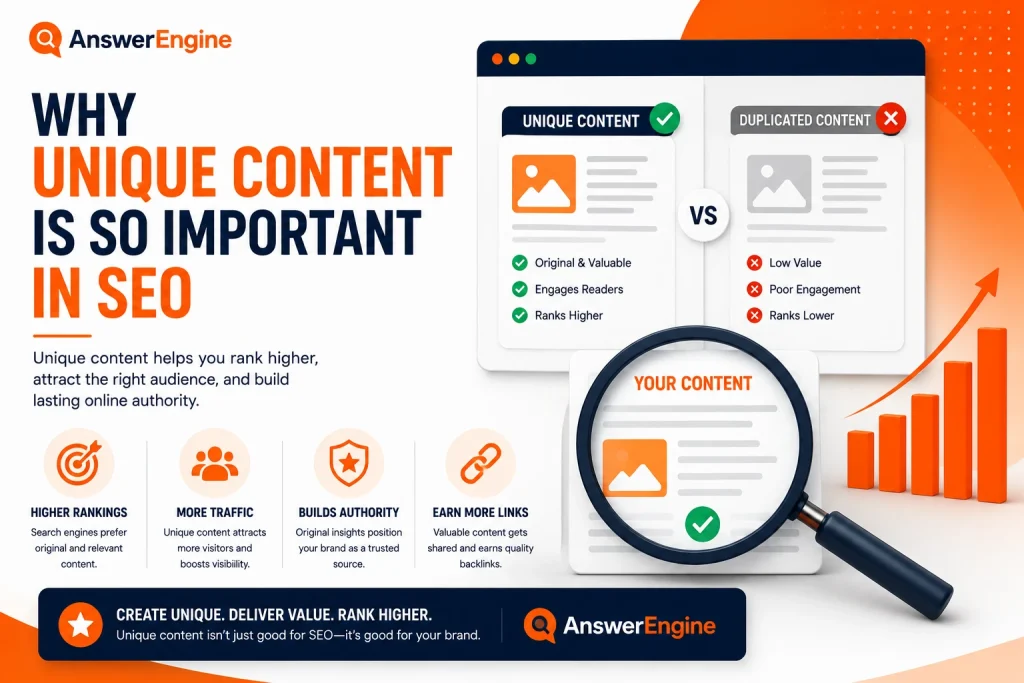
Google SGE and AI Overviews prefer content that directly answers the target query in the first paragraph or a clearly marked early section, is marked up with FAQPage or HowTo schema, comes from a domain with established topical authority for the subject matter, and contains specific, named information rather than generic statements. Content from domains that consistently publish credible content on the topic area has a citation advantage. Generic content that covers a topic in the same terms as hundreds of other pages has lower citation probability than content with specific entities, original perspective, or first-person expertise.